Quick Answer: The right fit is a melamine dinnerware wholesale supplier that can show documented drop, weight, stacking, and dishwasher test results, hold food-contact compliance papers for your destination market, and deliver export-packed replenishment on a predictable schedule. Restaurants should prioritize impact resistance and wash-cycle life. Airlines should prioritize weight per set, nesting height, and trolley fit.
Plates that crack, chip, or dull too early quietly drain budgets. Restaurants lose stock to dish-pit accidents, while airlines lose efficiency to heavy, bulky in-flight service ware. Many buyers search for break-resistant lightweight melamine dinnerware, yet two operations with the same material can need very different products.
This guide explains how to test, compare, and shortlist suppliers using evidence instead of catalog claims. It reflects current compliance and sourcing practices for 2026.
Is Melamine the Right Choice for High-Breakage Restaurant Service?
Direct Answer: Yes, in most high-breakage settings. Melamine resists shattering, weighs far less than porcelain, and tolerates rough handling. Its limits are heat (no microwaves, and typically a ceiling of about 120°C), gradual surface dulling, and a less “premium” feel than ceramic.
Melamine-formaldehyde resin is a thermoset: once molded under heat and pressure, it does not melt again. That makes it tough against drops, but it can stain, scratch, or lose gloss with repeated abuse.
Melamine vs. Other Tableware Materials
| Factor | Melamine | Porcelain | Bone China |
| Drop resistance | Very high | Low to moderate | Moderate (thin, but strong) |
| Weight | Lightest (roughly half of porcelain) | Heavy | Light to medium |
| Microwave use | Not suitable | Suitable | Suitable (no metal trim) |
| Surface wear | Gloss fades with wash cycles | Excellent | Excellent |
| Typical use | Buffets, outdoor, fast-casual, airlines | Fine and casual dining | Premium hotels, fine dining |
When Should Restaurants Choose Melamine Tableware?
Choose melamine when breakage, weight, or noise drives your costs: buffets, outdoor patios, banquet turnover, kids’ menus, food courts, poolside service, and high-volume fast-casual kitchens.
Prefer porcelain or bone china when the plate is part of the brand experience, such as tasting menus, or when microwave reheating is routine.
How Do Restaurant and Airline Risks Differ?
Direct Answer: Restaurants face impact and wash-cycle risk. Airlines face weight, space, and turbulence risk. A product built for one environment can underperform in the other.
| Risk Factor | Restaurant Service | Airline Service |
| Main failure mode | Drops, chipping, staining, scratching | Cracks under cold, vibration, and repeated trolley loading |
| Weight sensitivity | Moderate (staff handling) | Very high (every gram adds fuel cost) |
| Stacking | Shelf and dish-rack storage | Tight trolley and galley dimensions |
| Washing | Commercial dishwasher, high volume | Centralized catering wash lines |
| Reorder pattern | Seasonal, tied to breakage rate | Scheduled fleet programs, strict specs |
| Approval path | Owner or chef decision | Airline or caterer engineering approval |
Restaurants lose product through accidents. Airlines lose efficiency through design. That is why airline buyers specify wall thickness, rim height, and nested stack height down to the millimeter.
How Should You Test Drop Resistance, Weight, and Stackability?
Direct Answer: Run controlled tests on production samples: repeated drops onto a hard floor from a set height, gram-level weight checks, and measured stack heights against your trolley or shelf dimensions.
For break-resistant lightweight melamine dinnerware, never rely on a single showroom demonstration. Ask the supplier for test reports and replicate the key checks yourself.
Drop Resistance
Request a written drop protocol covering height (commonly counter height, around 1 meter), surface (concrete or tile), number of drops, and pass criteria. Test several pieces from different production lots. Look for chipping at the rim, not just full breakage.
Weight
Weigh five to ten pieces per SKU and record the average and variation. For airlines, compare weight per complete passenger set. Consistent weight also signals consistent pressing quality.
Stackability
Measure nested height of ten pieces, check that stacks stay stable, and confirm that stacked rims do not scratch the glaze surface. Airline buyers should test against the actual trolley drawer.
What About Surface Wear, Dishwasher Compatibility, and Replacement Cycles?
Direct Answer: Quality melamine survives hundreds of commercial wash cycles, but high-temperature sanitizing rinses and harsh alkaline detergents accelerate gloss loss. Replacement cycles of roughly two to five years are commonly seen in busy venues, depending on handling and wash chemistry.
What Drives Surface Wear
- Melamine grade: Higher resin content and thorough curing improve hardness and stain resistance.
- Wash chemistry: Over-concentrated detergent and extreme rinse temperatures shorten life.
- Handling: Metal scouring pads and stacking wet pieces cause avoidable scratching.
Building a Replacement Cycle
Start with a par level 15 to 20 percent above peak demand, review wear quarterly, and retire plates with deep scratches or staining, which can trap residue.
Can a Supplier Prove Break Resistance Without Marketing Claims?
Direct Answer: Yes. Credible proof includes third-party lab reports, food-contact compliance documents, batch-level quality records, and willingness to let you test samples independently.
Phrases like “unbreakable” are marketing language. Ask for evidence instead:
- Food-contact compliance: FDA 21 CFR 177.1460 for the U.S. and Regulation (EU) No 10/2011 for the EU. China-origin melamine kitchenware entering the EU also falls under Implementing Regulation (EU) No 284/2011, which requires a declaration of compliance and supporting laboratory data. Germany’s LFGB is also widely requested.
- Migration test reports: Results for melamine and formaldehyde release from an accredited laboratory, dated within the last 12 months.
- Mechanical test records: Drop, impact, and thermal shock results tied to specific lot numbers.
- Quality management evidence: Incoming raw-material checks, in-line inspection, and final inspection records.
- Sample policy: Willingness to ship production samples, not hand-picked showpieces.
A supplier that hesitates on documents is telling you something. Verify certificates directly with the issuing laboratory.
Does the Exporter Understand Airline and Restaurant Operating Requirements?
Direct Answer: Look for proof, not promises: hospitality-specific references, repeat-order data, customization experience, and clear answers about weight limits, stacking dimensions, and approval procedures.
A melamine tableware exporter for restaurants and airlines should speak fluently like Jinqiangyi about operating realities: dish-machine temperatures, trolley dimensions, galley storage, and catering approval cycles. Ask how they handle engineering-style specifications, tolerance control, and lot traceability.
Evidence of Relevant Experience
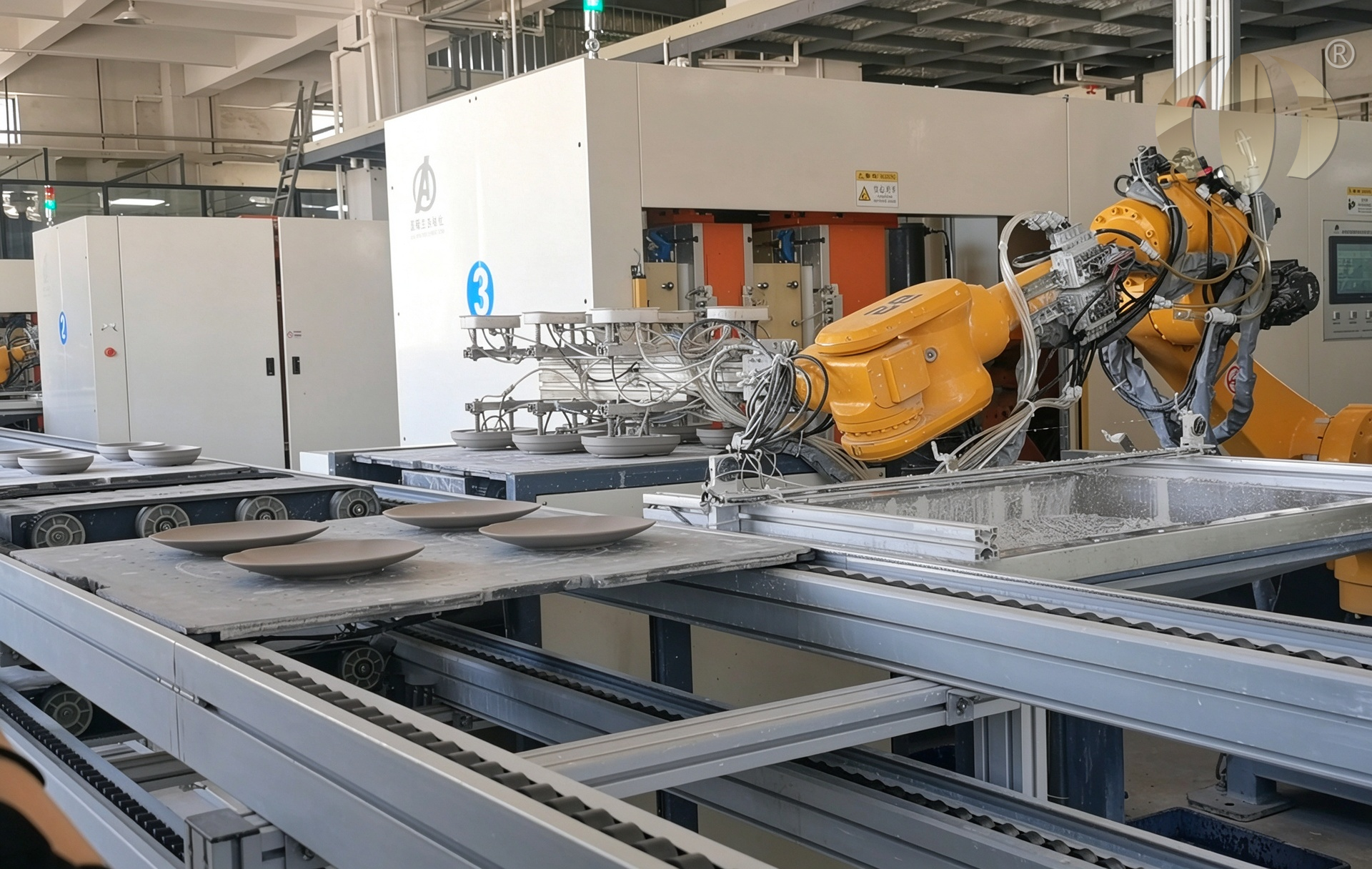
Guangdong Jinqiangyi Ceramics offers a useful example of verifiable credentials. Founded in 2004, it reports 20+ years serving hotels, airlines, and restaurants, a 150,000+ square meter factory, 500+ employees, monthly output above 2.5 million pieces, and 3,000+ hotel and restaurant customers, with a repurchase rate of 68.75%. It manufactures melamine alongside porcelain, color glaze, and bone china lines, and supports custom patterns, logos, shapes, sizes, colors, and packaging.
Strong repurchase rates matter because buyers rarely reorder products that failed in service.
What Export Packaging and Replenishment Lead Times Should You Expect?
Direct Answer: Typical industry ranges are 7 to 15 days for samples and 25 to 45 days for production, plus shipping. Confirm exact figures in a written quotation, since artwork, color, and order size change the schedule.
Export Packaging Standards
- Inner protection: Polybags or paper separators between pieces to prevent rim scuffing.
- Cartons: Five-ply corrugated with clear piece counts and weights.
- Palletizing: Stretch-wrapped pallets that maximize container fill and reduce shifting.
- Documentation: Packing list, commercial invoice, and compliance declarations ready for customs.
Replenishment Planning
A reliable melamine tableware exporter for restaurants and airlines should agree on minimum order quantities, safety stock, and reorder triggers up front. Mixed-SKU container loads (LCL or FCL) help restaurants with varied needs. Airline programs benefit from forecast-based scheduling. Ask whether the supplier keeps raw material or semi-finished stock for faster repeat orders.
Scenario-to-Supplier Matching Matrix
Direct Answer: Match the supplier to your operating scenario: restaurants need durability proof and wash-cycle data, airlines need weight and fit control, and importers need documentation and packaging discipline.
| Your Scenario | Priority Requirements | What to Request from a Melamine Dinnerware Wholesale Supplier |
| High-volume restaurant or buffet | Drop resistance, stain resistance, low unit cost | Lot-tested drop reports, wash-cycle data, bulk pricing |
| Hotel banquet or outdoor dining | Stack stability, color consistency, quiet handling | Custom colors, stack-height drawings, sample sets |
| Fast-casual chain with branding | Logo accuracy, repeatable orders | Custom decoration capability, repurchase references |
| Airline or inflight caterer | Gram-level weight, nested height, trolley fit | Dimensional drawings, weight tolerance data, approval support |
| Importer or distributor | Compliance papers, export packing, steady supply | Updated migration reports, palletization plan, lead-time commitments |
Frequently Asked Questions
Is melamine dinnerware safe for restaurant use?
Yes, when it is manufactured to food-contact standards and used within its limits. Verify compliance with FDA and EU rules, and avoid microwave heating or prolonged high-heat contact.
How do I choose break-resistant lightweight melamine dinnerware?
Compare drop test records, weight per piece, wall thickness, and nested stack height across lots. Order samples and test them under your own conditions.
Can melamine tableware go in a commercial dishwasher?
Generally yes, within the supplier’s stated temperature and detergent guidelines. Very hot sanitizing rinses and strong alkaline detergents shorten surface life.
How do I choose a melamine dinnerware wholesale supplier?
Shortlist suppliers with lab reports, hospitality references, and sample policies, then compare them using the matrix above.
What documents should an exporter provide?
Ask for a food-contact declaration of compliance, recent lab migration reports, material specifications, a packing list, and factory quality records.
How long does replenishment usually take?
Plan for roughly 25 to 45 days for production plus transit, with stock-based reorders sometimes faster. Always confirm in writing.
How do I verify a melamine tableware exporter for restaurants and airlines?
Check customer references, request third-party reports, audit factory capability, and ask for airline-specific test data and approvals.
Conclusion
A trustworthy melamine dinnerware wholesale supplier proves that melamine suits high-breakage restaurant service when drop resistance, light weight, and durability matter more than microwave use or a fine-china feel. The best supplier proves performance through lab reports, lot-level test data, compliant documentation, and export-ready packaging, and it understands that restaurants and airlines judge tableware by different standards.
When you source break-resistant lightweight melamine dinnerware, compare candidates using the matching matrix above, test samples yourself, and favor a melamine tableware exporter for restaurants and airlines with traceable hospitality experience.
Contact Us for Samples, Specifications, and Export Quotes
Ready to evaluate melamine tableware with Jinqiangyi for your restaurant, hotel, or catering program? Share your quantities, sizes, colors, and destination market, and our team will respond with sample options and a written quotation.
Contact Us Today for a Free Sample and Quote →
Authored by a hospitality tableware and melamine manufacturing specialist. All technical guidance on melamine dinnerware durability, impact resistance, food-contact safety, dishwasher performance, product testing, export packaging, and supplier quality assessment reflects recognised industry standards and market conditions as of 2026.