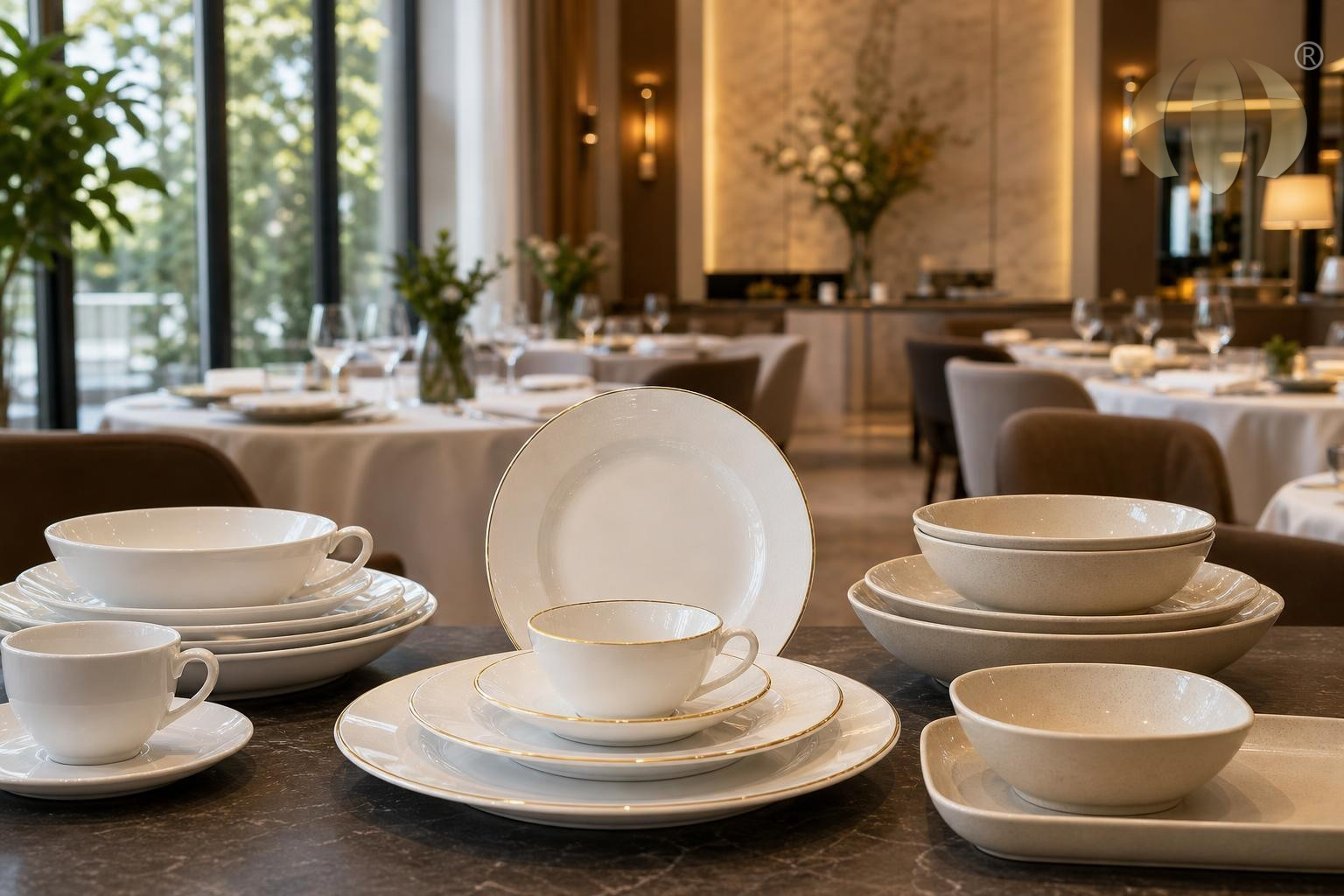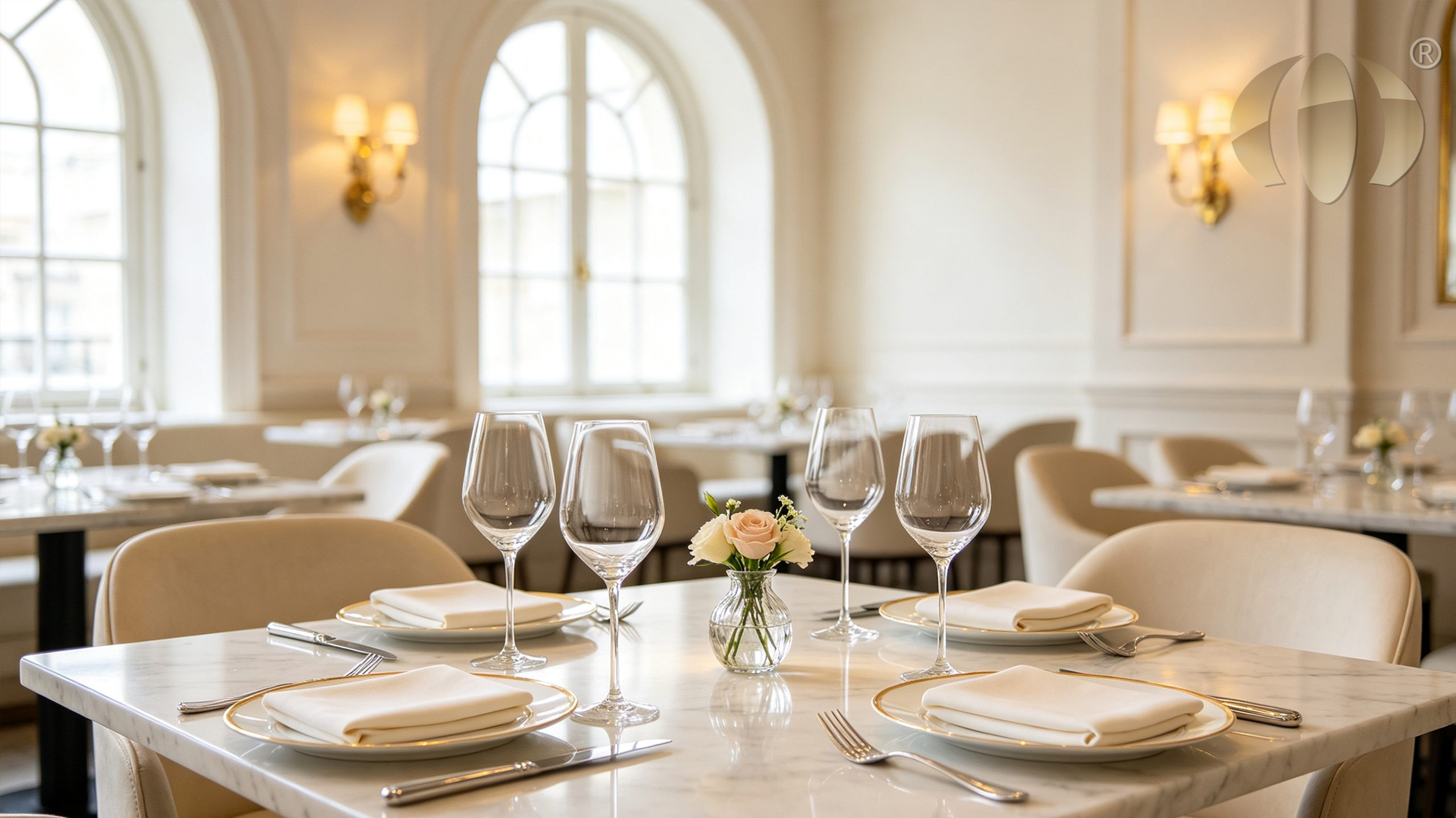
Opening a new restaurant branch involves more than choosing furniture, hiring staff, and planning the menu. Dinnerware is another important decision that affects daily operations, food presentation, and purchasing costs. For restaurant chains, getting this decision right across multiple locations can be challenging.
A reliable restaurant dinnerware wholesale strategy helps buyers maintain consistent table settings, control inventory, and reduce unexpected replacement costs. However, how do you select the right products, calculate quantities, and keep every branch supplied?
This guide explains how procurement teams can build a practical dinnerware rollout plan, from product selection to long-term replenishment.
How to Plan Restaurant Dinnerware Wholesale Orders for Multiple Branches
Before placing a bulk order, buyers need to understand how much dinnerware each location actually requires. Ordering too little can interrupt service, while purchasing too much ties up storage space and money.
The best approach is to calculate requirements based on daily usage, washing cycles, and expected customer traffic.
Calculate Dinnerware Quantities Per Branch
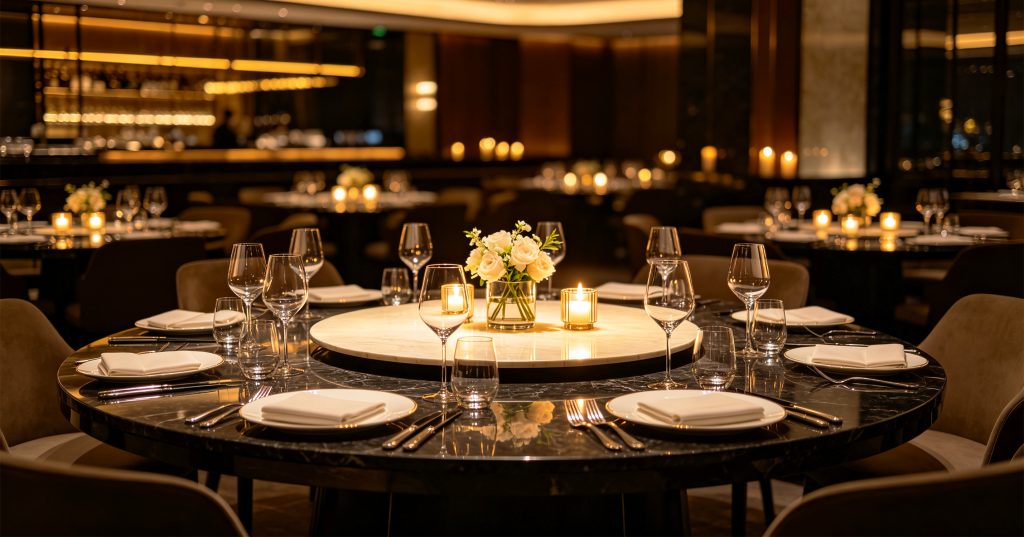
Start by reviewing seating capacity, average daily covers, and the number of times tables turn over. A busy restaurant may need more plates than a smaller location with similar seating capacity.
Consider this example:
| Dinnerware Item | Suggested Quantity per Branch | Main Use |
| Dinner plates | 200 pieces | Main courses |
| Side plates | 150 pieces | Starters and side dishes |
| Soup bowls | 120 pieces | Soups and liquid dishes |
| Dessert plates | 100 pieces | Desserts |
| Serving bowls | 40 pieces | Shared dishes and serving |
Note: These are sample quantities. Actual requirements depend on seating capacity, customer traffic, menu, and washing cycles.
These figures are sample planning quantities, not fixed purchasing standards. Actual requirements depend on the menu, service style, and washing capacity.
Include Backup Stock
A restaurant should always maintain additional pieces for breakage, unexpected demand, and washing delays. A starting reserve of 10–15% can be useful, although high-volume locations may need more.
Once quantities are calculated, the next question is whether the selected dinnerware can handle the demands of daily commercial use.
How to Choose Chip-Resistant Restaurant Plates for Daily Operations
Restaurant plates face constant handling, stacking, washing, and transportation. Even attractive dinnerware can become expensive if it needs frequent replacement.
When sourcing chip-resistant restaurant plates, buyers should look beyond appearance and compare material quality, construction, and performance.
Choose the Right Dinnerware Material
Different materials serve different operational needs.
| Dinnerware Material | Best Suited For | Key Characteristics |
| Porcelain | Restaurants, hotels, and everyday dining | Versatile, attractive, and suitable for many hospitality settings |
| Bone china | Fine dining and premium hotels | Refined appearance and lightweight feel |
| Melamine | Selected casual dining and outdoor settings | Lightweight and resistant to breakage |
Note: Buyers should check product-specific suitability, washing instructions, and food-contact requirements before purchasing.
The right choice depends on your service environment. For example, a fine dining restaurant may prefer porcelain or bone china, while a busy casual dining outlet may consider melamine for suitable applications.
Check Durability and Washing Requirements
Ask suppliers about body strength, glaze quality, edge durability, and resistance to repeated washing. Also confirm whether products are suitable for your commercial dishwasher and cleaning conditions.
No plate is completely chip-proof. Request samples and test them under realistic operating conditions before approving a large order.
After choosing suitable materials, the next challenge is making sure every branch receives the same products.
Managing Restaurant Dinnerware Wholesale SKUs Across Locations
Imagine opening five restaurant branches and discovering that each location uses slightly different plates. Reordering becomes difficult, storage gets complicated, and the dining experience loses consistency.
A standardized SKU system helps prevent these problems.
Create a Core Dinnerware Collection
Start with a list of approved products for each dining function. You might include dinner plates, side plates, bowls, cups, and serving dishes.
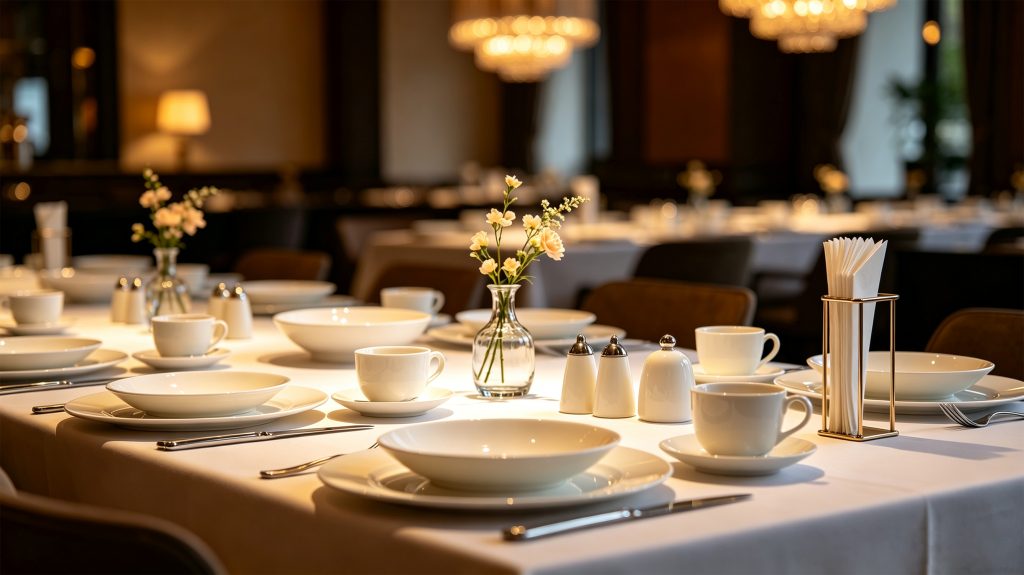
Assign every product a unique SKU code and record its specifications.
Restaurant Dinnerware SKU Management
| SKU Code | Product Name | Standard Specification |
| PL-001 | Dinner plate | 10-inch white porcelain |
| PL-002 | Side plate | 7-inch white porcelain |
| BW-001 | Soup bowl | 8-inch porcelain |
| CP-001 | Cup | 250 ml porcelain |
Note: These are sample SKU codes and specifications. Restaurant chains should create their own product codes based on their approved dinnerware collections.
These are sample codes. Your purchasing team should create codes that match its internal inventory system.
Keep Product Specifications Consistent
Record material, dimensions, color, weight, decoration, and approved supplier details. Keep an approved sample for future comparisons.
This becomes especially important when branches open in different cities or countries. Consistent specifications make repeat purchasing easier and reduce the risk of receiving products that look different from previous orders.
But what about restaurants and hotels that serve large numbers of guests through buffet stations? Their requirements need additional planning.
Planning Buffet Dinnerware Wholesale for Hotels and Restaurants
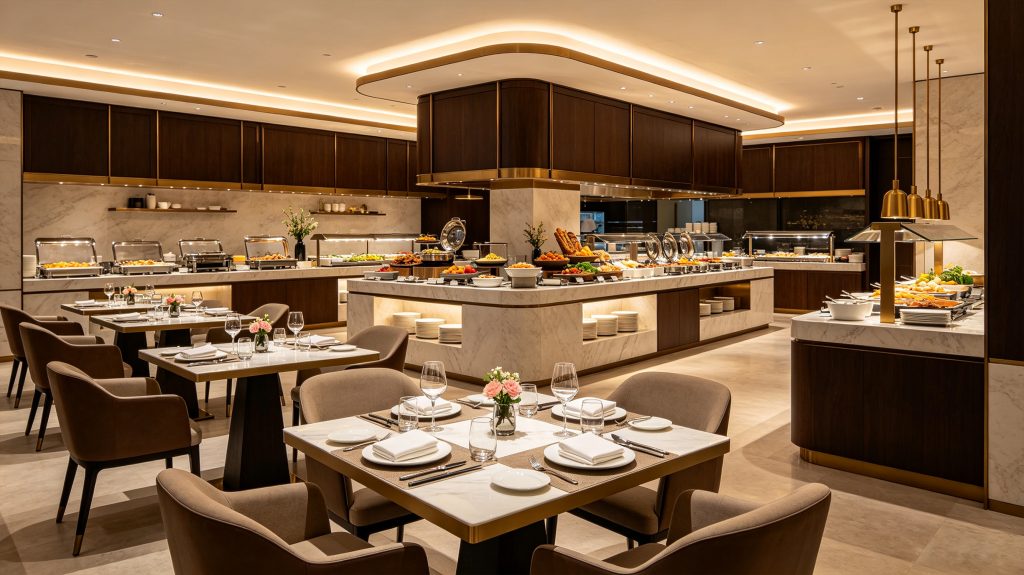
Buffet operations place different demands on dinnerware. Guests serve themselves, plates move quickly between stations, and staff must maintain enough clean pieces throughout service.
Effective buffet dinnerware wholesale planning starts with understanding the buffet layout and expected guest numbers.
Select the Right Products for Each Station
Different buffet areas need different tableware.
Breakfast stations: Plates, bowls, cups, and saucers.
Salad stations: Small plates, bowls, and serving dishes.
Main course stations: Dinner plates and larger serving pieces.
Dessert stations: Dessert plates, small bowls, and cups.
Choose shapes and sizes that suit the food presentation while allowing efficient stacking and storage.
Calculate Quantities Around Guest Flow
Consider the number of guests, service duration, plate replacement frequency, and washing turnaround.
For example, a hotel serving 200 breakfast guests may need more plates than its seating capacity suggests if guests return to the buffet several times.
Plan quantities around actual service patterns rather than guest numbers alone.
Once the right buffet collection is selected, procurement teams must make sure replacement products remain available when needed.
Building a Reliable Hotel Crockery Replenishment Plan
Even well-planned dinnerware inventories change over time. Plates may chip, bowls may break, and new branches may increase demand.
A proper hotel crockery replenishment system helps purchasing teams avoid shortages without holding unnecessary stock.
Establish Minimum and Maximum Stock Levels
Set minimum stock levels for each SKU. When inventory reaches the reorder point, purchasing teams should arrange replacement orders.
A simple formula is:
Reorder Point = Average Daily Usage × Supplier Lead Time + Safety Stock
For example, if a restaurant uses 10 plates daily, supplier lead time is 20 days, and safety stock is 50 plates, its reorder point is 250 plates.
Coordinate Repeat Orders With Suppliers
Share approved specifications and samples with your supplier. Before confirming repeat orders, check production schedules, quantities, packaging, and shipping arrangements.
For international wholesale purchases, allow enough time for manufacturing, inspection, transportation, and customs clearance.
A dependable supplier relationship makes replenishment easier. So, what should chain restaurant buyers look for in a long-term manufacturing partner?
Why Choose Us for Restaurant Dinnerware Wholesale?
At JQY Ceramics, we understand that hotels and restaurants need more than attractive tableware. They need products that suit their operations, match their brand identity, and support future purchasing requirements.
Since 2004, we have been manufacturing tableware for hospitality businesses and developing products for different dining environments.
More Than 20 Years of Manufacturing Experience
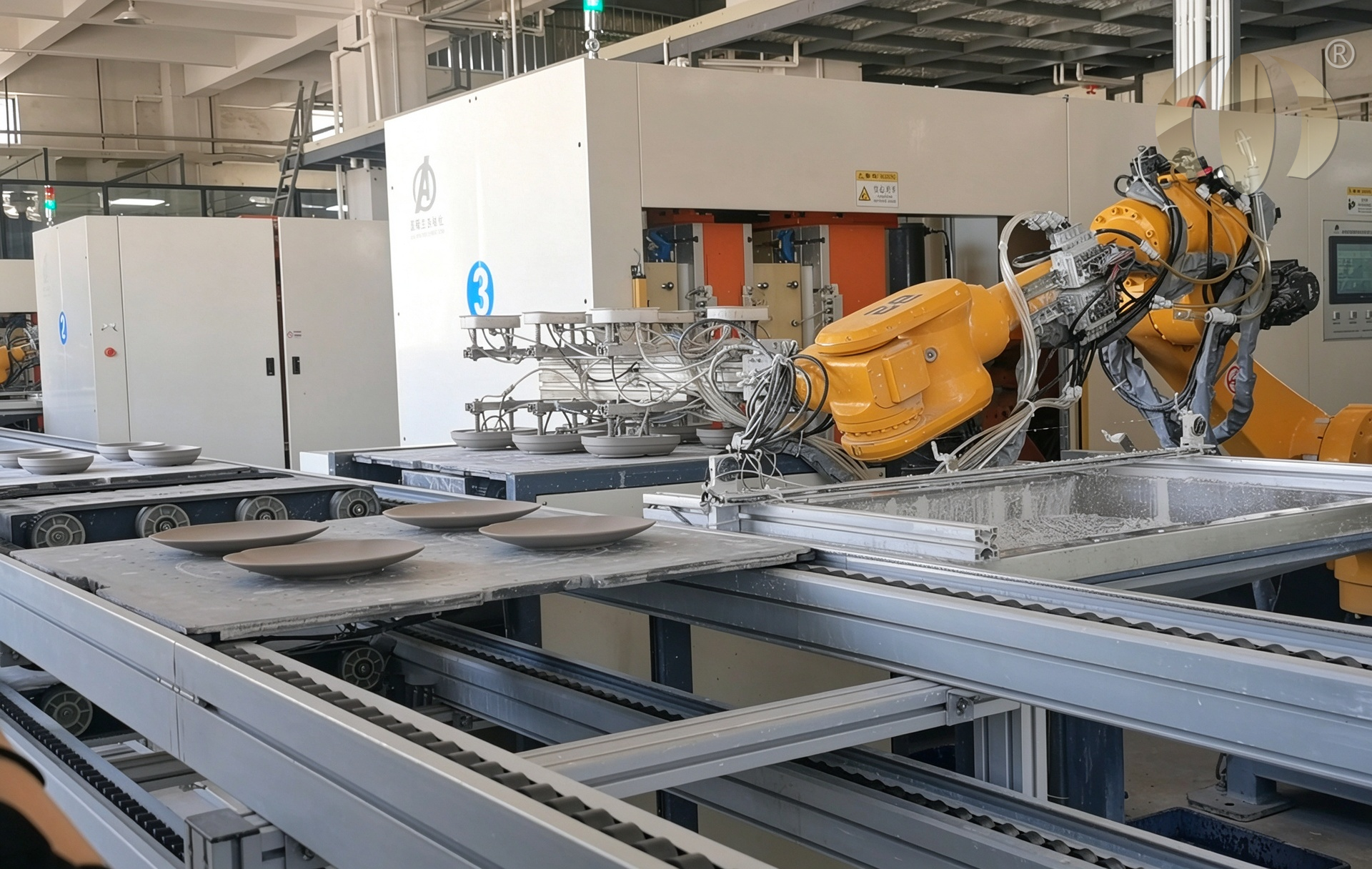
Our experience in tableware manufacturing helps us understand the needs of hotels, restaurants, and hospitality projects. We have a team of more than 500 employees, three tunnel kilns, and automated production lines.
Our homepage reports monthly output of more than 2.5 million pieces, supporting our ability to serve wholesale requirements.
Multiple Materials for Different Dining Environments
We offer porcelain, color glaze, bone china, and melamine tableware. Buyers can explore different options based on their restaurant concept, service requirements, and presentation preferences.
OEM and ODM Customization
We provide customization options for logos, patterns, colors, shapes, sizes, and packaging. Our design team can help develop products that reflect your brand identity.
From initial concepts and sample development to production and final inspection, we support customers throughout the customization process.
Manufacturing and Quality Control
Our manufacturing process includes forming, trimming, firing, decoration, inspection, and packaging. We pay attention to production details to help maintain consistency across approved products and repeat orders.
Whether you are opening new restaurant branches, developing a hotel dinnerware collection, or expanding your wholesale product range, we work with you to understand your requirements and develop suitable tableware solutions.
Conclusion
A successful branch rollout requires more than placing one large dinnerware order. Buyers need to consider product durability, quantity planning, SKU standardization, buffet requirements, and future replenishment.
Choosing the right restaurant dinnerware wholesale partner can also make a difference by helping maintain consistent product specifications as your business grows.
At JQY Ceramics, we are ready to discuss your dinnerware requirements and customization ideas. Whether you need porcelain plates, buffet tableware, or a complete collection for multiple restaurant branches, contact us to explore a suitable wholesale solution for your next hospitality project.
Frequently Asked Questions
1. How much dinnerware should a new restaurant branch order?
Calculate quantities using seating capacity, daily covers, washing cycles, and replacement needs. Include an additional safety stock based on expected usage.
2. What material is best for restaurant dinnerware?
Porcelain is a versatile choice for many restaurants. Bone china suits premium dining, while melamine can work for selected casual and outdoor settings.
3. How can buyers find chip-resistant restaurant plates?
Compare material quality, glaze, rim construction, and washing performance. Request samples and test them before placing bulk orders.
4. How often should hotels replenish crockery?
Review inventory regularly and reorder when stock reaches the established reorder point. Consider breakage rates and supplier lead times.
5. Does JQY Ceramics offer customized wholesale dinnerware?
Yes. We offer OEM and ODM services, including customized logos, patterns, colors, shapes, sizes, and packaging.